The Selfishness Of Helping ‘The World’

30 Aug 2010, Posted by Josh Allan Dykstra in Life, 3 Comments

The Selfishness Of Helping ‘The World’


We have this idea that to put too much attention on what drives and motivates us is somehow selfish. This is a lie. What the world really needs is exactly one thing: more you.

Continue Reading...
How To Discover Your Strengths

17 Aug 2010, Posted by Josh Allan Dykstra in Life, 3 Comments

How To Discover Your Strengths


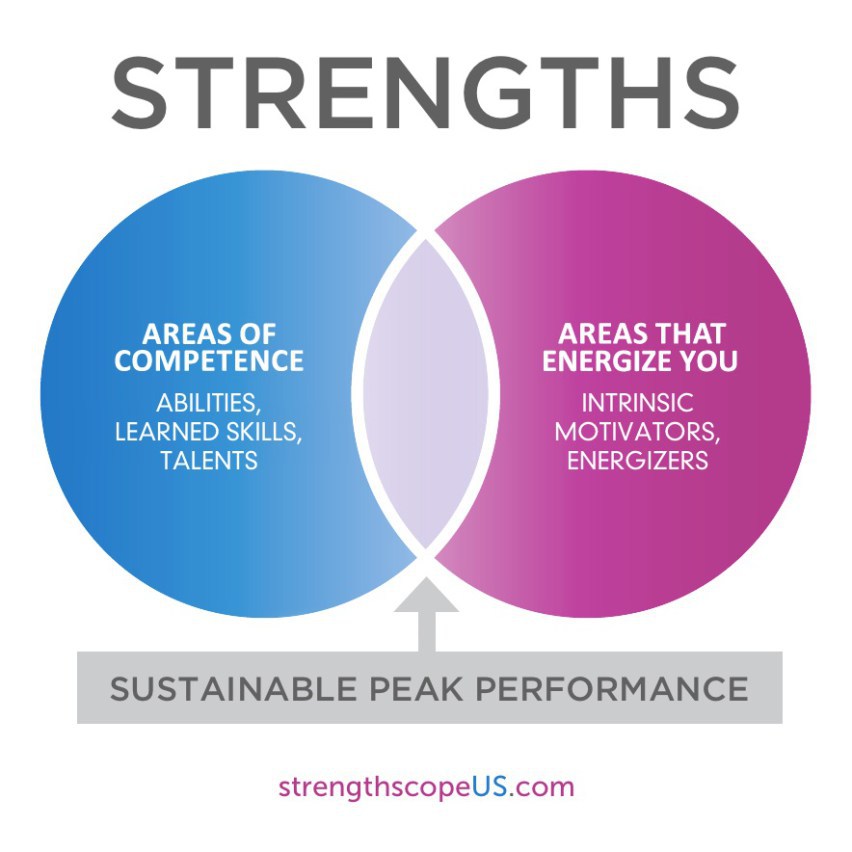
“Live a strong life.” That sounds great, and we all want to do it, but… how? Discovering your strengths and rocking your career can be boiled down to a focus on three things: 1) Talent, 2) Life Experience, and 3) Passion. This is how to find your area of strength…

Continue Reading...
7 Dirty Little Secrets of Job Hunting (How to Find a Job, Change Careers, etc.)

17 May 2010, Posted by Josh Allan Dykstra in Life, 10 Comments

7 Dirty Little Secrets of Job Hunting (How to Find a Job, Change Careers, etc.)


Trying to make any kind of career shift can be incredibly frustrating, and I’ve found there are some dirty little secrets most people just don’t talk about when it comes to job hunting. Here are 7 unconventional, and helpful, things I’ve learned.

Continue Reading...
Age Has Nothing To Do With How Old You Are

05 May 2010, Posted by Josh Allan Dykstra in Leadership, Legacy, Life, 1 Comments

Age Has Nothing To Do With How Old You Are


If age isn’t really about age, what is it about? (And why should we care…!?)

Continue Reading...
American Idol & My Nonexistent NBA Career

07 Dec 2009, Posted by Josh Allan Dykstra in Leadership, Life, 1 Comments

American Idol & My Nonexistent NBA Career


I’m sure our collective parents all collectively meant well when they collectively told us that we could “be anything we wanted to be” when we grew up.

Unfortunately, this is a lie.

Continue Reading...
Culture Eats Strategy For Breakfast

12 Oct 2009, Posted by Josh Allan Dykstra in Leadership, 3 Comments

Culture Eats Strategy For Breakfast


“Culture eats strategy for breakfast.”

I’ve experienced this firsthand, as likely have you. How many times have we seen a “great idea” for our organization get buried… somehow, mysteriously, and at the end reflect back on the process only to realize we have no idea how exactly it died?

Short answer: the culture killed it.

Continue Reading...
How To Stop Sucking

09 Oct 2009, Posted by Josh Allan Dykstra in Leadership, Legacy, 3 Comments

How To Stop Sucking


It seems like the right thing is to focus more time on making our weaknesses better. After all, this is what we are taught our whole lives in school–if I suck at math, I spend the most time working on that subject.

But we are wrong. Focusing on our weaknesses is usually completely futile.

Let’s accept it: we all suck at something. And even more, what we suck at sucks the life out of us. So why do we keep doing these things!? How can we stop sucking?

Continue Reading...
Incorporate Yourself

06 May 2009, Posted by Josh Allan Dykstra in Life, 0 Comments

Incorporate Yourself


I’m working on writing another book. It started as an idea for a project I had to create for my MBA program and has morphed into a giant opus that is consuming my life.

OK, that last part isn’t really true, but it does feel like a pretty daunting task sometimes.

This morning I decided to set aside a couple hours to just write. As a completely freelance independent contractor, I’m trying to have more personal discipline with the things I do, starting by setting aside blocks of time to work on a specific thing: Finance Homework, 9a-noon; Book/Writing, noon-3p, that kind of thing. It doesn’t always work (I’m not sure if you’re aware but there are a LOT of interesting things on the internet), but I think the self-control of a regimen is really great.

I’m all about viewing ourselves as a “brand,” as an “enterprise.” YOU are the business. Even if you get paid as an employee, think of yourself as a contractor: lending your talents to the project at hand.

Incorporate yourself.

The benefits to this way of thinking are astronomical. I’ll explore this concept more in future posts, but in a nutshell it’s simply more empowering. It’s one thing to say, “This is what I do, and this how I can bring value to your company if we partner together.” It’s another thing altogether to be sending out resumes all day, getting, or feeling, rejected one after the other. (If you’ve ever been unemployed you know exactly what I’m talking about; it’s literally inhumane.)

It’s not easy to think of ourselves in this new way, though. There’s a lot of sociological baggage we’ve got to ditch (our culture focuses primarily on weaknesses over strengths, for example), and good time management is a really tough skill to learn. Also, we’re taught that a 60 hour work week is what it takes to be successful. But some very prosperous people don’t do that. We’re told that we get out of something what we put into it. But due to things like the concept of leverage and the Pareto Principle (or 80/20 rule), we know that’s not really true either. We’ll talk more on that another day.

There’s usually a lot of re-training that has to happen before we can learn how to build a better personal leadership brand.

For today, I think we start with simply questioning the assumptions. Does your work have to be done the way it’s always been done? Do you have to live the way you’ve been living?

There’s a cool moment at the end of a film with two brothers sitting on the beach talking about recent frustrating circumstances, and one says to the other: “This is your life. Right now. It doesn’t wait for you to get back on your feet.”

I’ll leave you with some thoughts from the principles of Kaizen (Japanese for “improvement”):

  1. Get rid of old assumptions; ask “Why?” five times to get to the root cause.
  2. Don’t look for excuses, look for ways to make things happen.
  3. Say “NO” to the status quo.
  4. Don’t worry about being perfect—even if you only get it half right, start now.
  5. If something is wrong, fix it on the spot.

//

If you liked that post, then try these...

Pay What You Want For My Last Album by Josh Allan Dykstra on December 8th, 2009

The Grass Ain't Greener by Josh Allan Dykstra on May 22nd, 2009

What The Heck Is RSS!? by Josh Allan Dykstra on January 27th, 2009

Continue Reading...
God Is Not Gonna Paint Your Van

05 May 2009, Posted by Josh Allan Dykstra in Life, 0 Comments

God Is Not Gonna Paint Your Van


Driving home from the office today I got stuck behind one of those huge old Dodge Ram vans — you know the kind where you can fit an entire living room set in the back. Most of it was beige-ish, although the cream-colored paint was fraying from the edges around the doors and windows like it was running for its life. On the back right rear door, just below the window, it had a bumper sticker that said:

RELAX: God is in control.

Now, that might be true (I like to think it is), but let’s just be honest with ourselves — God is not going to come down and paint your frickin’ van.

These things are our responsibility.

I got a call today from a good friend of mine who has been hit with a series of really crappy life circumstances lately. Now some of them he created, and he owns that, but the point of the call was to let me know that he’s fed up with it, and he’s doing some things to change his life. Taking steps. Moving forward.

The big picture might very well be taken care of, but that doesn’t mean we should just sit there and wait for God to come over with a bucket of beige.

What are you doing — TODAY — to improve the situations in your life? You don’t have to be sick to get better.

//

If you liked that post, then try these...

The Selfishness Of Helping 'The World' by Josh Allan Dykstra on August 30th, 2010

Spider-man 3 Part 2 by Josh Allan Dykstra on July 10th, 2007

12 Songs You Need On Your iPod by Josh Allan Dykstra on May 23rd, 2009

Continue Reading...
Productivity Stats

05 Mar 2009, Posted by Josh Allan Dykstra in Leadership, 0 Comments

Productivity Stats


I came across an fascinating list of stats provided by Dr. Donald E. Wetmore, the President of the Productivity Institute in Connecticut. Some pretty interesting stuff in here!

  • There will be 2 million marriages in this country this year and 1 million divorces. 95% of divorces are caused by a “lack of communication”

  • The average working person spends less than 2 minutes per day in meaningful communication with their spouse or “significant other”. The average working person spends less than 30 seconds a day in meaningful communication with their children.

  • 80% of employees do not want to go to work on Monday morning. By Friday, the rate only drops to 60%.

  • 31% of working Americans do not use all their vacation time that they have earned. On average, three out of twelve (one quarter!) of all vacation days go unused.

  • The average person gets 1 interruption every 8 minutes, or approximately 7 an hour, or 50-60 per day. The average interruption takes 5 minutes, totaling about 4 hours or 50% of the average workday. 80% of those interruptions are typically rated as “little value” or “no value” creating approximately 3 hours of wasted time per day.

  • On an average day, there are 17 million meetings in America.

  • By taking 1 hour per day for independent study, 7 hours per week, 365 hours in a year, one can learn at the rate of a full-time student. In 3-5 years, the average person can become an expert in the topic of their choice, by spending only one hour per day.

  • 95% of the books in this country are purchased by 5% of the population. 95% of self-improvement books, audio tapes, and video tapes purchased are not used.

  • 97% of workers, if they became financially independent, would not continue with their current employer or in their current occupation.

  • 20% of the average workday is spent on “crucial” and “important” things, while 80% of the average workday is spent on things that have “little value” or “no value”.

  • In the last 20 years, working time has increased by 15% and leisure time has decreased by 33%.

  • A person who works with a “messy” or cluttered desk spends, on average, 1 1/2 hours per day looking for things or being distracted by things or approximately 7 1/2 per workweek. “Out of sight; out of mind.” When it’s in sight, it’s in mind.

  • The average reading speed is approximately 200 words per minute. The average working person reads 2 hours per day. A Speed Reading course that will improve the reading rate to 400 words per minute will save an hour per day.

  • 90% of those who join health and fitness clubs will stop going within the first 90 days.

  • 9 out of 10 people daydream in meetings.

  • 60% of meeting attendees take notes to appear as if they are listening.

  • 40% of working people skip breakfast. 39% skip lunch. Of those who take a lunch break, 50% allow only 15 minutes or less.

  • The average American watches 28 hours of television per week.

  • 78% of workers in America wish they had more time to “smell the roses”.

  • 49% of workers in America complain that they are on a treadmill.

  • Angry people are twice as likely to suffer a heart attack as a person in better control of their emotions.

  • 75% of heart attacks occur between the hours of 5:00 a.m.-8:00 a.m., local time, and more heart attacks occur on Monday than on any other day of the week.

  • 25% of sick days are taken for illness. 75% of sick days are taken for other reasons.

  • 95% of the things we fear will occur, do not occur.

  • Taking 5 minutes per day, 5 days per week to improve one’s job will create 1,200 little improvements to a job over a 5 year period.

  • 1 out of 3 workers changes jobs every year.

  • 1 out of 5 people moves every year.

  • 70% of American workers desire to own their own business.

  • 75% of American workers complain that they are tired.

  • The average worker gets a 6 hours and 57 minutes of sleep per night.

  • The average worker spends 35 minutes per day commuting.

  • When someone is asking for our time for a meeting, 80% of the time, there is an alternate date and time that will be acceptable.

  • Good time managers do not allocate their time to those who “demand” it, but rather, to those who “deserve” it.

  • The most powerful word in our Time Management vocabulary is “no”.

  • 1 hour of planning will save 10 hours of doing.

  • Hiring a college student to do routine tasks (grocery shopping, yard work, household chores, etc.) will create as much as 20 hours per week for the average person to devote to more productive uses.

  • The average person today (1999) receives more information on a daily basis than the average person received in a lifetime in 1900.

  • We retain 10% of what we read. We retain 20% of what we hear. We retain 30% of what we see. We retain 50% of what we hear and see. We retain 70% of what we say. We retain 90% of what we do.

  • Half of what is known today, we did not know 10 years ago. The amount of knowledge in the world has doubled in the last 10 years. And it is said to be doubling again every 18 months.

Now, I admit that I do not know where these stats came from (although Dr. Wetmore seems to be a very credible individual), but even if they’re just close, they’re pretty darn interesting, don’t you think?

//

If you liked that post, then try these...

The Magic Of Organizational Change by Josh Allan Dykstra on August 12th, 2010

Org Fit Has Nothing To Do With Your Org by Josh Allan Dykstra on May 14th, 2010

Triage Or Die by Josh Allan Dykstra on May 11th, 2008

Continue Reading...
  • Get Updates By Email

    Enter your email address:

    Delivered by FeedBurner

  • Recent Posts

  • Topics

  • Twitter (@joshallan)

    • ...loading Twitter Stream
  • Recent Comments

http://blog.joshallan.com/wp-content/themes/press